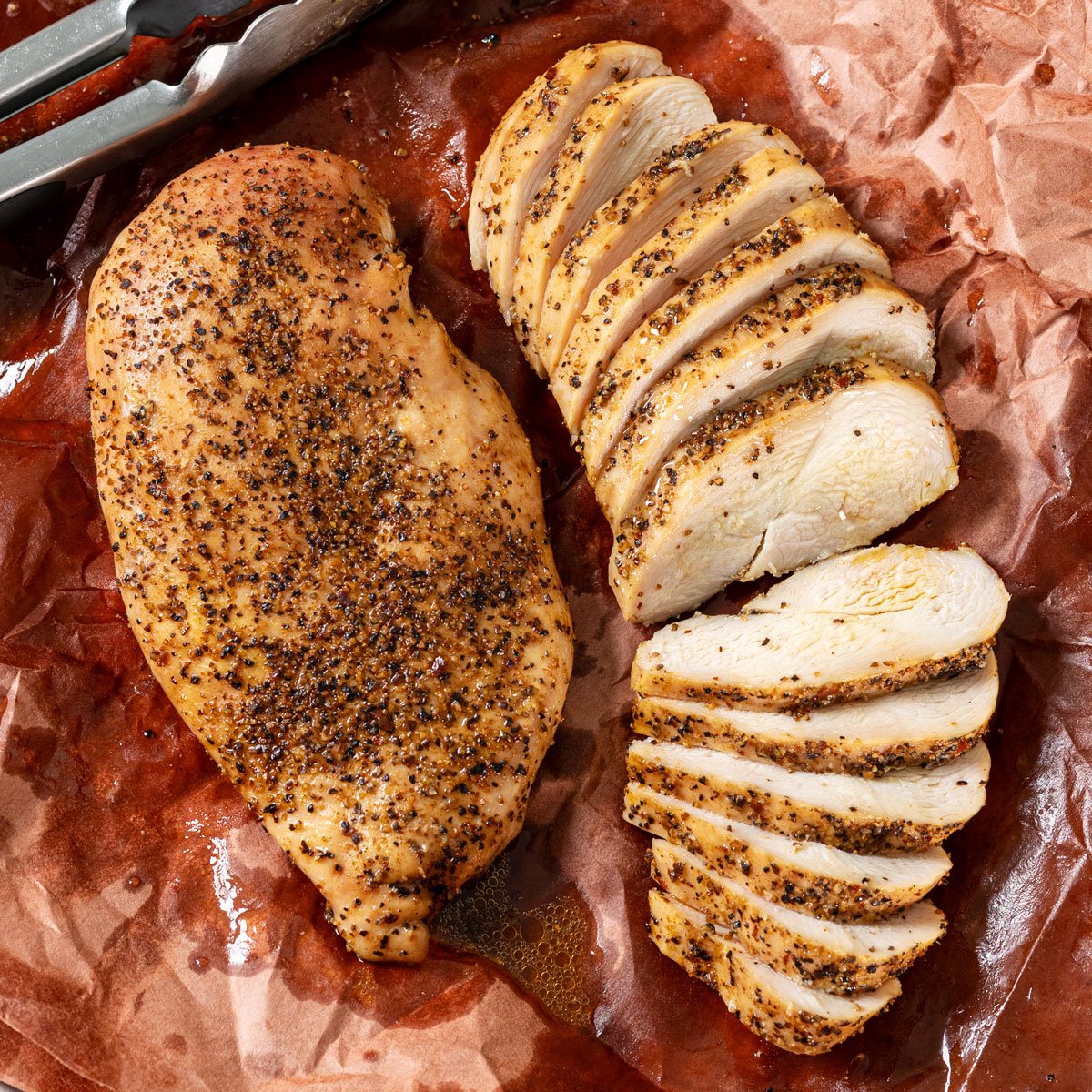
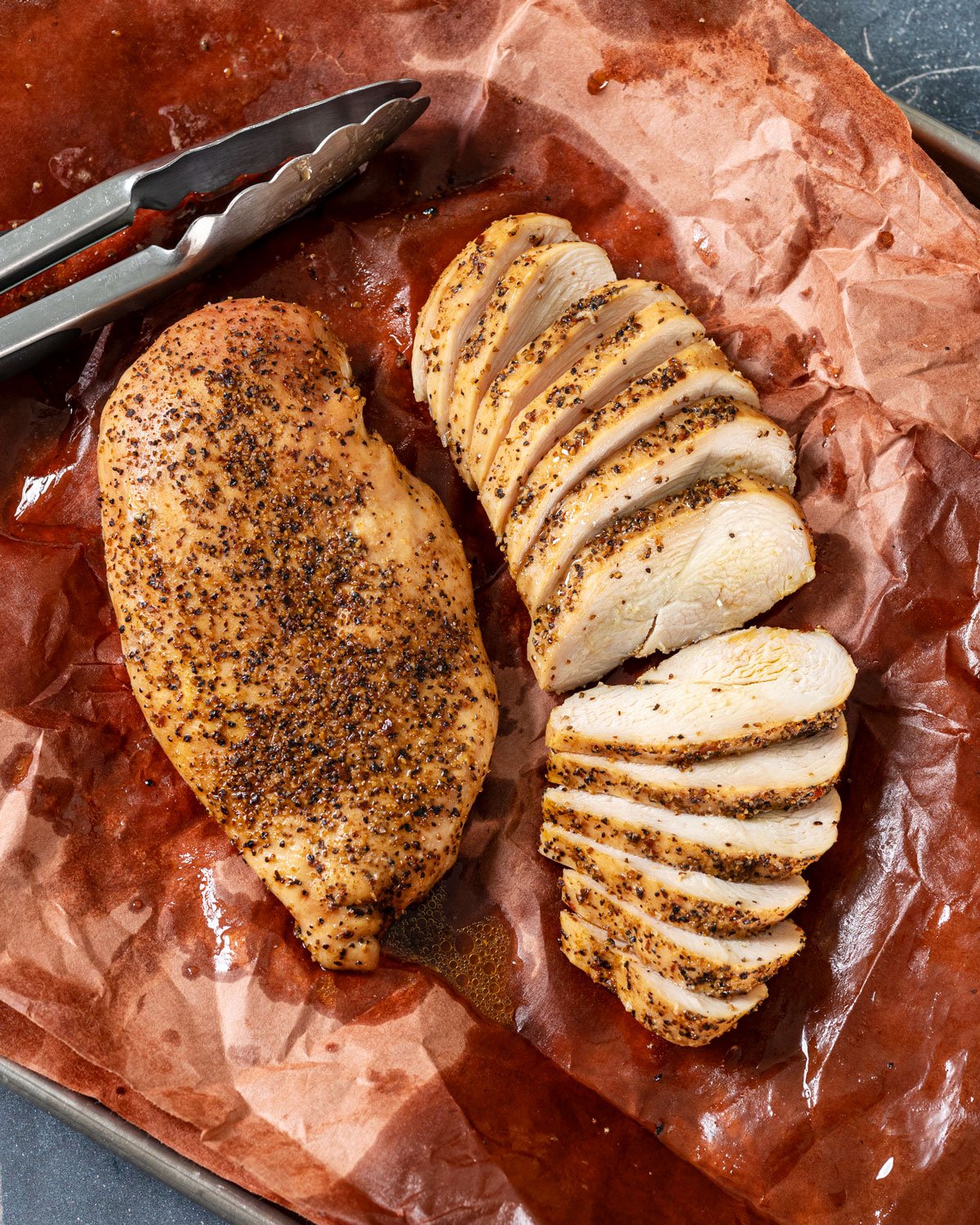
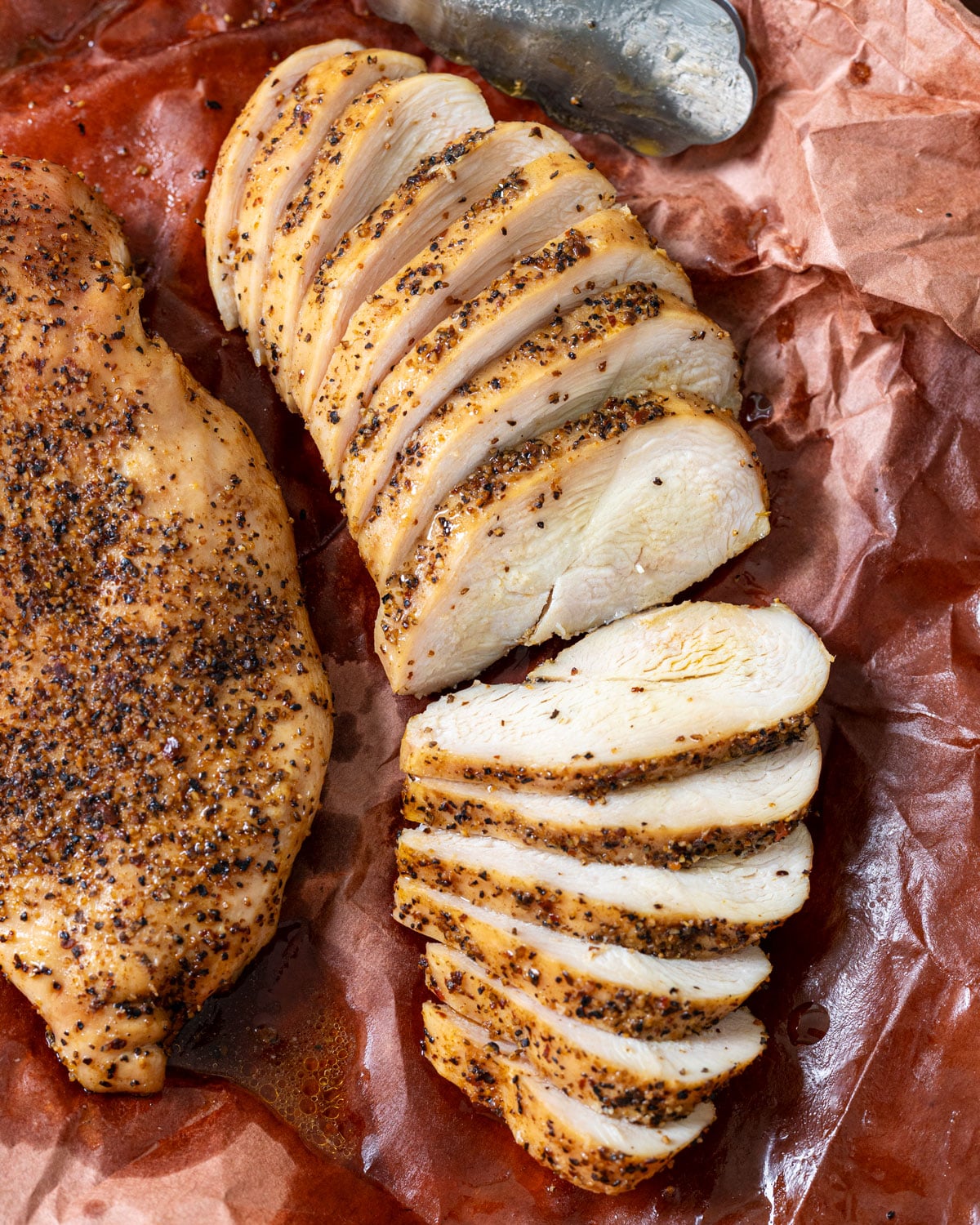
Forget dry, boring chicken—Smoked Chicken Breasts transform an everyday protein into the juiciest, most flavorful meat you’ll pull off your smoker this season! A blend of gentle smoke, buttery basting, and precise temperature control keeps these smoked chicken breasts incredibly juicy while building layers of rich, smoky flavor.
I’ve smoked more chicken breasts than I can count, and after plenty of trial and error, I’ve nailed down a ridiculously simple method. Once you know the tricks, it’s foolproof, and it doesn’t take a couple of hours.
This is hands down my favorite way to smoke chicken breasts—they soak up a ton of smoky flavor without drying out. No fancy gear or complicated ingredients are needed—just chicken, butter, a solid rub, and a little patience.
The butcher paper technique is my not-so-secret weapon that transforms what could be ordinary chicken into something your family will actually get excited about on a random Tuesday night. Trust me, this is the chicken recipe you’ll end up making at least twice a month!
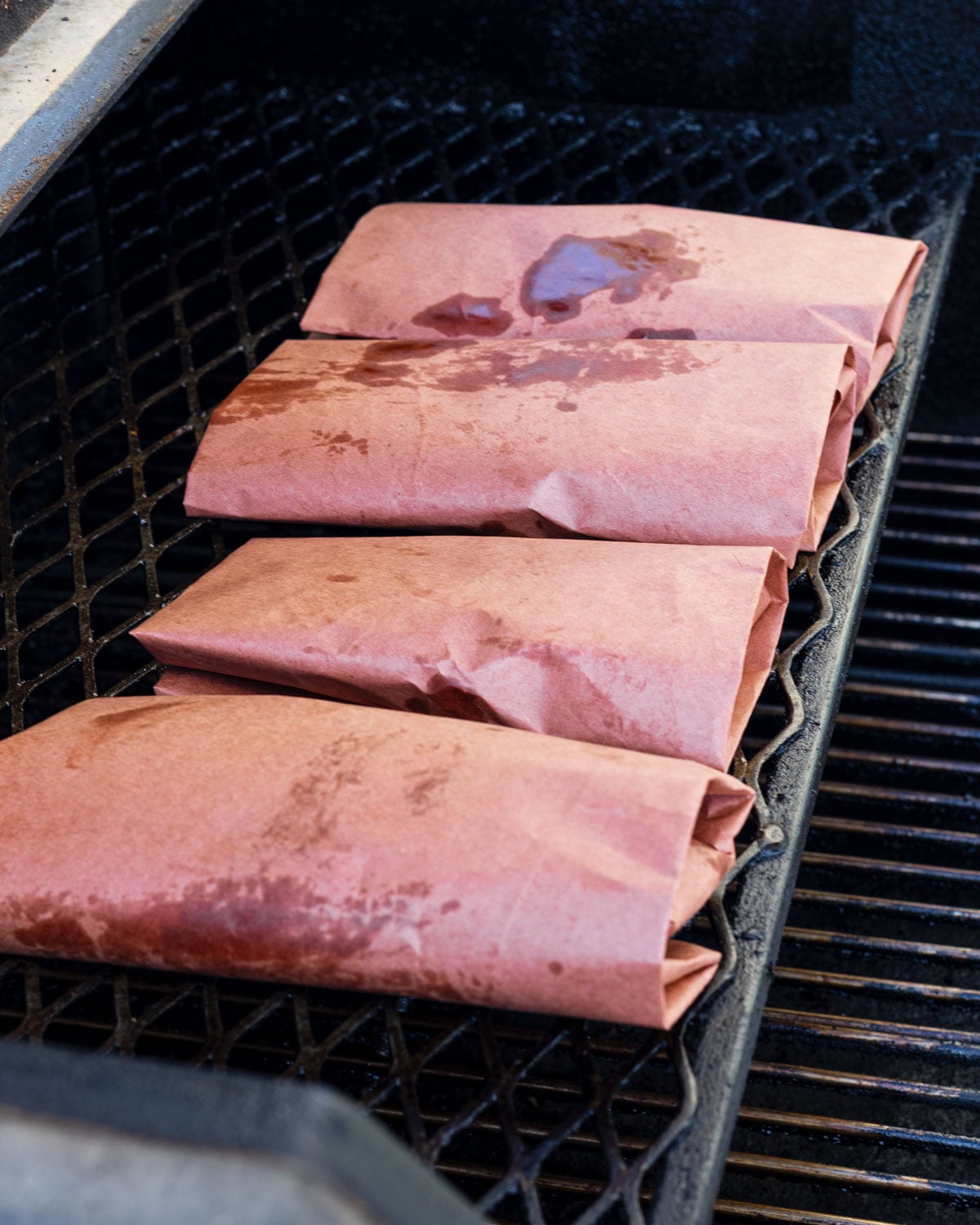
The Butcher Paper Technique: The pink butcher paper creates a micro-environment that traps moisture while still allowing the smoke to penetrate, giving you that perfect balance of tenderness and flavor.
Unmatched Versatility: Smoked chicken breasts are a meal prep powerhouse. They will maintain their appeal whether served hot off the smoker, cold in a salad the next day, or transformed into sandwiches, wraps, and grain bowls throughout the week.
The Butter Factor: Adding pads of butter during the wrapping phase might seem excessive, but it’s absolutely critical to the end result. As the butter melts, it bastes the chicken from the inside out, creating a rich, velvety texture that’s impossible to achieve with dry cooking methods alone.
Key Ingredients
Chicken Breasts — Use boneless chicken breasts that are uniform in size if possible.
Neutral Oil — A neutral oil is best to help the seasoning stick. Olive oil will add an additional flavor, so just be mindful if using that.
BBQ Seasoning — I used Canyon Crust BBQ seasoning here—mostly salt, black pepper, and garlic powder—but you can use any of your favorite seasonings.
Butter — Always go unsalted so you can control the final saltiness of the dish.
BBQ Sauce: Glaze with some sauce and unwrap the juicy chicken breasts right at the end for a few minutes. You’ll have a sweet, smoky flavor that’s hard to beat!
Supplies Needed
How to Make Smoked Chicken Breasts
Prepare the chicken. Pat the chicken dry with paper towels, rub in a little oil, and season generously on all sides, allowing them to rest at least 30 minutes up to a few hours before smoking. Keep cool in the fridge until ready to cook, not at room temperature.
Add to the smoker. Fire up the smoker to 225°F and place chicken breasts on the grates. This lower temperature will allow the chicken to pick up plenty of smoke flavor without cooking them too quickly. Let them roll for about 45 minutes, or until they hit around 125°F in the thickest part of the breast. Don’t just go by time—your meat thermometer is your best friend here.
Wrap with butcher paper and butter. Once they hit temp, pull them off and lay each of them down on a small sheet of butcher paper, ugly side up. Drop two thin pads of butter on top, then wrap it up nice and tight, making sure the buttered side stays up.
Add back to the smoker. Place the wrapped chicken breasts back into the smoker and turn the heat up to 250°F. Cook for another 25-30 minutes, until the internal temperature is about 160°F. The carry-over cooking will reach a safe internal temperature as the chicken rests.
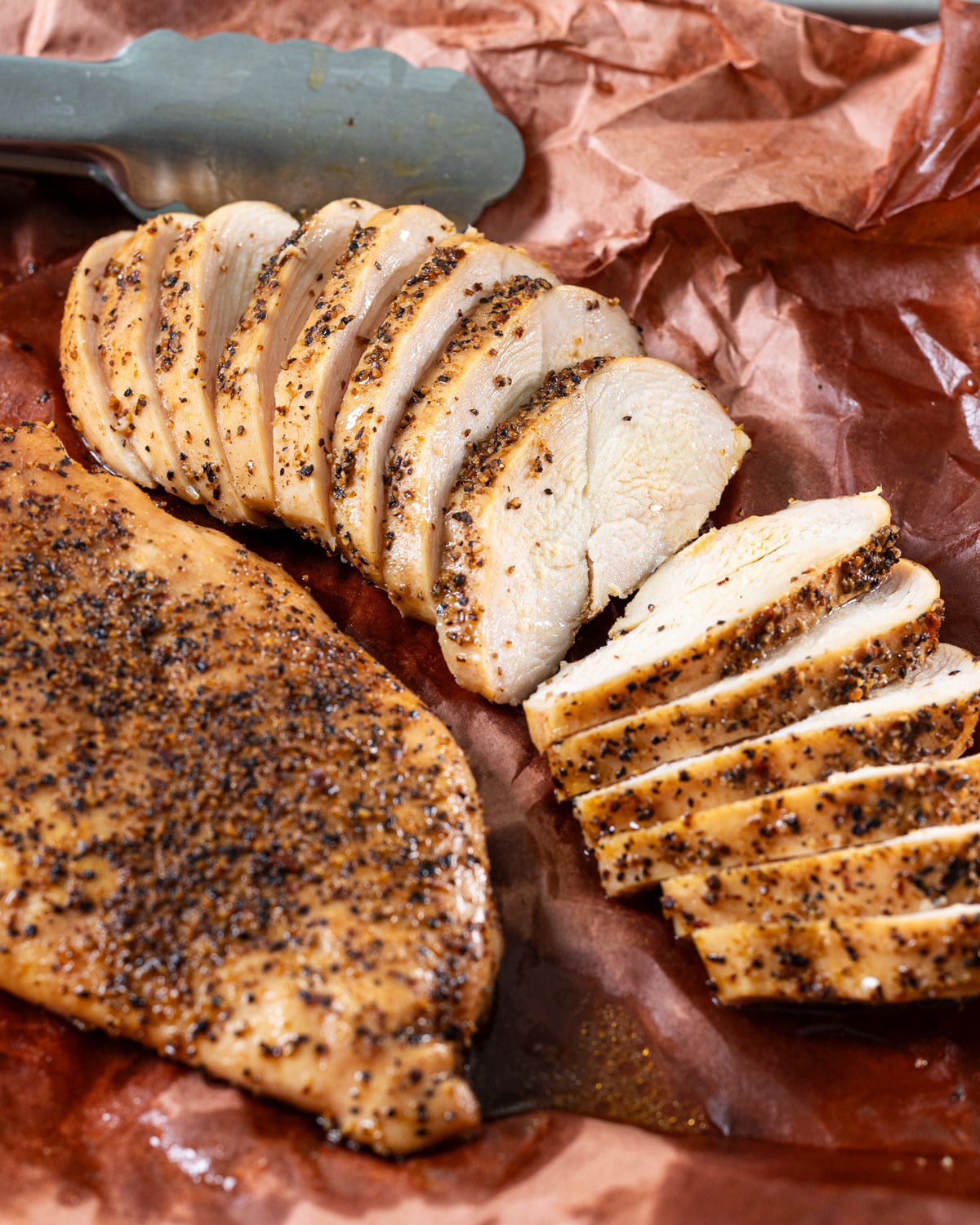
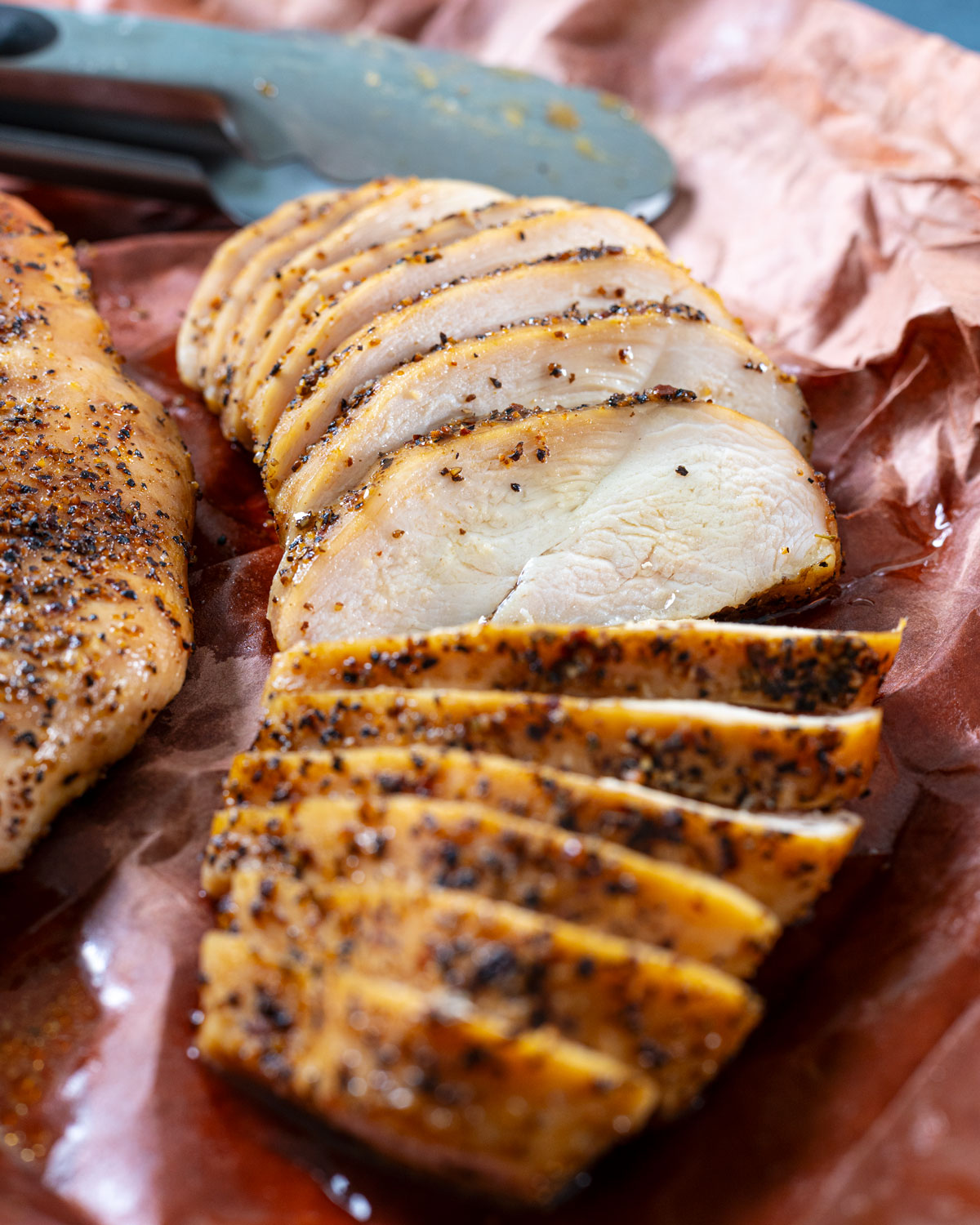
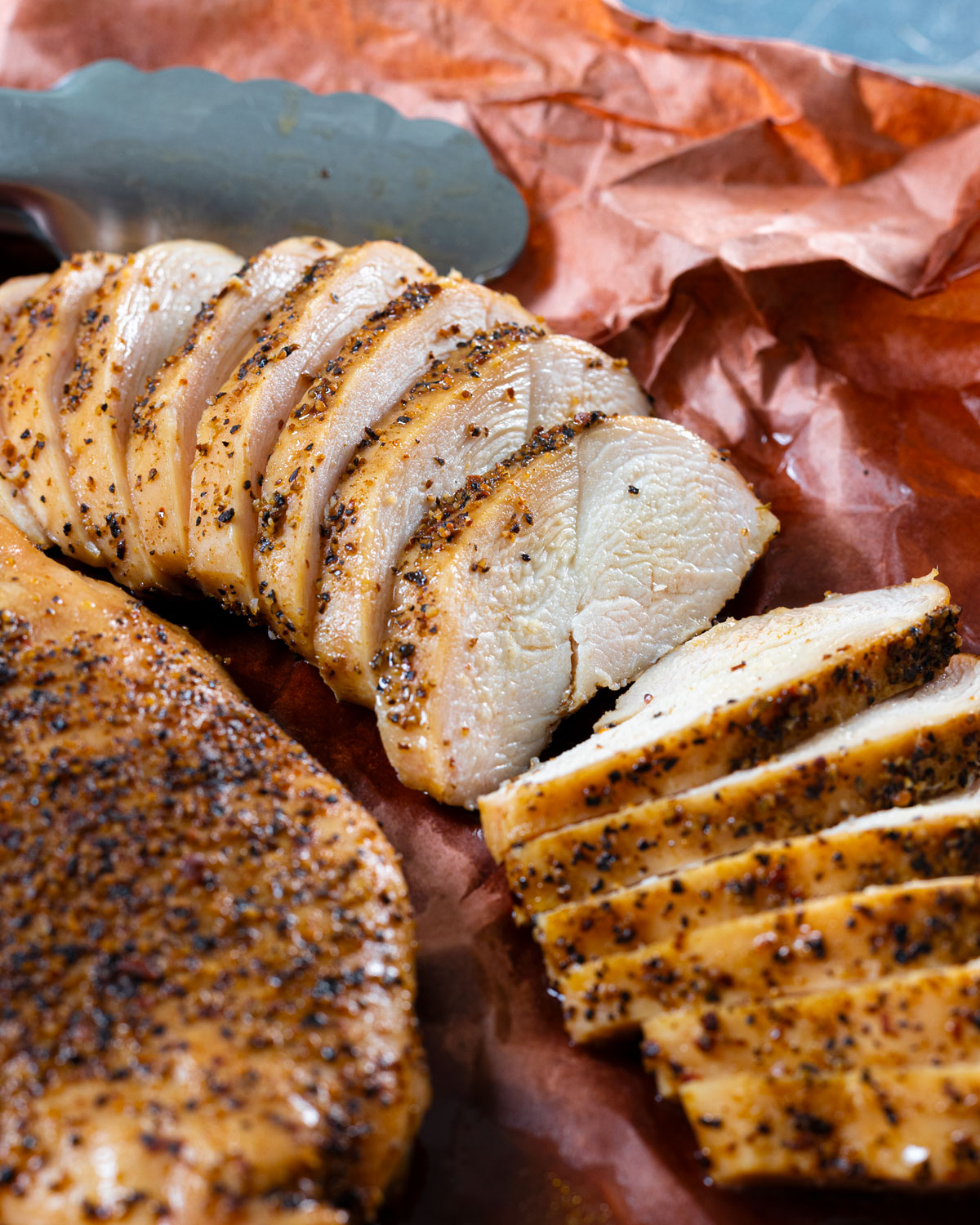
Rest & Serve. Rest the chicken for about 10 minutes and slice to serve. Reserve the buttery juices from the butcher paper and pour over the sliced chicken. Serve with your favorite BBQ sauce, chop up the smoky chicken for a salad or sandwich, or just enjoy warm slices off the cutting board.
Top Tips
Time can vary depending on the size of the chicken breasts. Make sure you follow the internal temperature – do not rely solely on the cooking time! Filling up your smoker with large chicken breasts could increase the overall time by another 20 minutes, so have your instant read thermometer handy.
Aluminum foil is an option, but allow the chicken to smoke a little longer before wrapping – about 135°F – which will help prevent it from getting too soft.
Keep the buttery chicken juice from the butcher paper, there’s flavor there! Pour it on the chicken after it’s sliced just before serving.
USDA recommends cooking to 165°F for safety, so I recommend cooking until the chicken hits 160°F, then the chicken will hit 165°F as it rests!
How to Store Leftover Chicken Breast
If you somehow manage to have leftovers, store them properly to maintain that hard-earned quality. Let the juicy chicken breasts cool completely before refrigerating in an airtight container. It’ll keep for 3-4 days and stays remarkably moist thanks to the butter technique.
For best results when reheating, wrap portions in foil with a tablespoon of water or chicken stock, and warm in a 300°F oven until just heated through (about 15 minutes).
FAQs
Can you put a frozen chicken breast on the smoker?
No, this is not advisable. It’s possible, but it’s also a risk to have an undercooked chicken in the center while the outside is overcooked. Thaw chicken breasts before cooking.
How long does it take to smoke chicken breasts at 225°F?
Just over an hour, including wrapping the chicken in butcher paper with butter.
Do you have to brine chicken breast before smoking?
Brine adds flavor and moisture, but also tenderizes the outside, which can compromise the texture of the bark. Dry brining works better for smoking a chicken breast, creating a better outside texture.
When is smoked chicken breast done?
Insert an internal meat thermometer into the thickest part of the breast to make sure it reaches at least 160°F. USDA recommends cooking chicken to 165°F for food safety, however, the smoked chicken will reach that temperature within minutes of resting once removed from the smoker. Personally I’ve found this to be the best way to get juicy chicken breasts.
Does smoked chicken breast have enough of a smoky flavor?
Smoking the chicken at a lower temperature of 225°F to start will give the chicken plenty of smoke flavor. If you’re using a charcoal smoker, you can add wood chunks or wood chips to enhance it even further.
More Smoker Recipes to Try
Thank You For Trying Our Recipe!
We’re here to bring people together with bold flavors, using spice and flames to ignite the food and friendships.
If you try this recipe, please consider leaving an honest review below. You can also find more content by following Chiles and Smoke on Instagram, YouTube, and Facebook.
4 tablespoons unsalted butter, divided into 8 thin pads
Oil and season the chicken breasts, allowing them to rest for at least 30 minutes up to a few hours before smoking. Keep cool in the fridge until ready to cook.
Fire up the smoker to 225°F and get those chicken breasts on the grates. Let them roll for about 45 minutes, or until they hit around 125°F. Don’t just go by time—your meat thermometer is your best friend here.
Once they hit temp, pull them off and lay each of them down on a small sheet of butcher paper, ugly side up. Drop two thin pads of butter on top, then wrap it up nice and tight, making sure the buttered side stays up.
Place the wrapped chicken breasts back into the smoker and turn the heat up to 250°F. Cook for another 25-30 minutes, until the internal temperature is about 160°F. The carry-over cooking will reach a safe internal temperature as the chicken rests.
Rest the chicken for about 10 minutes and slice to serve. Reserve the buttery juices from the butcher paper and pour over the sliced chicken.
Notes
Time can vary depending on the size of the chicken breasts. Make sure you follow the internal temperature – do not rely solely on the cooking time!
Aluminum foil is an option, but allow the chicken to smoke a little longer before wrapping – about 135°F – which will help prevent it from getting too soft.
Keep the buttery chicken juice from the butcher paper, there’s flavor there! Pour it on the chicken after it’s sliced just before serving.
USDA recommends cooking to 165°F for safety, but the carry-over cooking will reach that temperature as the chicken rests.